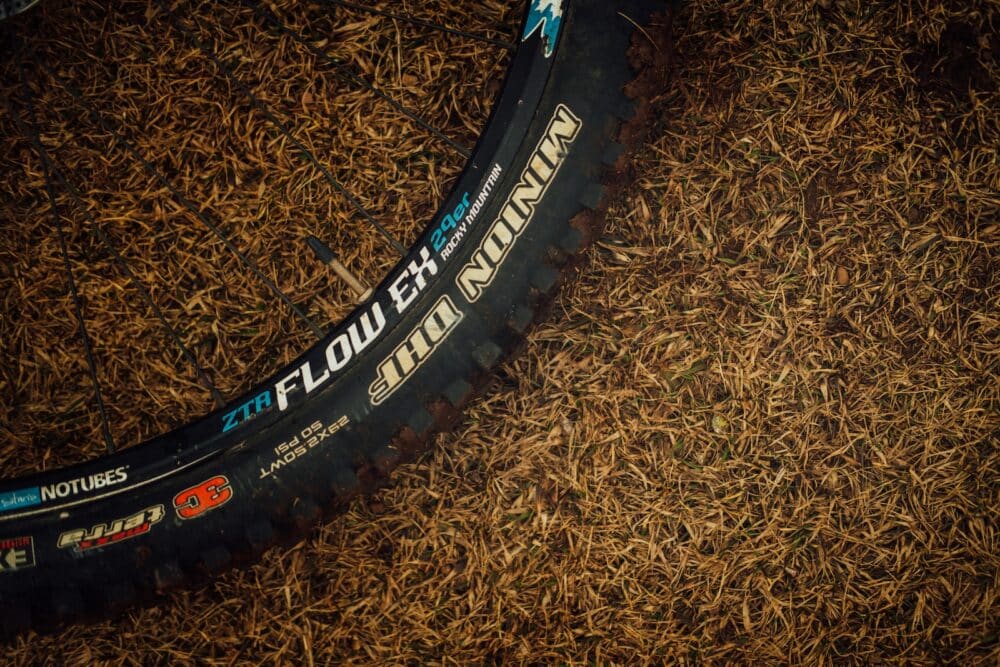
Determining the ideal amount of pressure for your mountain bike tire is crucial in ensuring a safe and comfortable ride. To achieve maximum performance, one must accurately pinpoint the perfect PSI for their tires. Here’s how you can do it.
To determine the perfect PSI for your mountain bike tire, consider your weight, terrain type, and desired level of traction. Refer to the table below for an approximate PSI range based on rider weight and tire width.
| Rider Weight | Tire Width | PSI Range |
|---|---|---|
| 120-150 lbs | < 2.0 inches | 22-25 |
| 150-180 lbs | < 2.0 inches | 25-28 |
| 150-180 lbs | > 2.0 inches | 22-25 |
| >180 lbs | < 2.0 inches | 28-32 |
| >180 lbs | >2.0 inches | 25-28 |
Remember that these are just guides, and variables such as temperature and riding style may affect your tire pressure needs.
Additionally, it’s essential to check your tire pressure before each ride using a reliable gauge to ensure consistency and accuracy.
A fellow mountain biker once shared his experience of neglecting proper PSI maintenance during a downhill run, leading him to skid off a dangerous turn that resulted in minor injuries. Remember always to prioritize safety by following proper guidelines for optimal tire performance.
Remember, your tire pressure isn’t just affected by the terrain, but also by the ghosts of bikers past haunting the trails.
Factors that Affect Tire Pressure
To understand how to achieve perfect tire pressure in your mountain bike, it’s important to take into consideration the factors that affect tire pressure. This section, “Factors that Affect Tire Pressure,” focuses on two important sub-sections: tire type and width, as well as rider weight and skill level. By understanding how each of these elements impacts tire pressure, you’ll be able to achieve optimal performance and comfort on the trail.
Tires Type and Width
Tire Variety and Breadth
Various kinds of tires have their requirements for optimal pressure. The tire width denotes the distance from one sidewall to the opposite sidewall. The greater the size, the more significant amount of air required to keep it appropriately inflated.
A table explicitly structured for tire types and widths can show you how different sizes need different pressures. For instance, a passenger vehicle will require a specific pressure compared to light trucks, SUVs, or sports cars that necessitate higher pressure levels.
It’s essential to know that tire type and size are not the only factors affecting tire pressure. Age, temperature variation, driving style are just as crucial.
For optimum performance, check your car’s manual for an accurate PSI reading and make adjustments regularly based on driving conditions and seasonal weather changes.
Summer heat causes tires to lose more air than winter cold thus requires regular inflation check-ups in hot weather. Alternatively, you should regularly inspect your tires during colder months since cold temperatures cause tire pressure to drop significantly. Properly inflated tires extend vehicle lifespan while reducing fuel consumption and helping maintain road safety standards.
Your weight may not affect tire pressure, but your skill level can turn a flat into a catastrophic blowout.
Rider Weight and Skill Level
When considering the impact of a rider’s characteristics on tire pressure, it is important to examine their physical attributes and skill level. A rider’s weight and expertise on the bike play a critical role in determining proper tire pressure. The following table shows the tire pressure recommendation based on rider weight and skill level:
| Rider Weight | Skill Level | Tire Pressure Recommendation |
| Under 130 lbs | Beginner/Novice | 20-25 psi front and rear |
| 130-150 lbs | All Skill Levels | 25-28psi front and rear |
| Above 150 lbs | All Skill Levels | 28-30psi front and rear |
Furthermore, lighter riders with beginner or novice skills will require less tire pressure as they do not apply as much force to the bike. On the other hand, heavier riders or those with advanced skills need more air in their tires to handle the added stress during high-speed turns and jumps. Pro Tip: Proper tire pressure assists riders in achieving maximum grip, avoiding flats, and prolonging the life of their tires. Remember to check your tire pressure regularly, because a flat tire is not just a hassle, it’s also a great excuse for being late.
How to Check Tire Pressure
To check your mountain bike tire pressure accurately, you need to have the right tools. In order to ensure the perfect PSI every time, you also need to know the recommended pressure range for your tire type. So, let’s discuss the two sub-sections in this article’s section called “How to Check Tire Pressure”: “The Right Tools for Checking PSI” and “Recommended Pressure Range for Different Types of Tires”.
The Right Tools for Checking PSI
To ensure accurate PSI measurements, it is essential to have the appropriate equipment. A thorough understanding of ‘The Necessary Tools for Checking Tire Pressure’ can help avoid inaccurate readings and keep your tires in top form.
| Tool | Description |
|---|---|
| Tire pressure gauge | Measures tire pressure accurately |
| Air compressor | Inflates tires to recommended PSI |
| Valve stem caps | Prevents debris from entering valve stem |
| Tread depth gauge | Measures tire tread for wear |
In addition to these essential tools, purchasing a good quality tire pressure gauge with both an analogue and digital display can provide added reassurance when taking measurements. Avoid relying solely on visual inspections as this can be misleading.
Remember, regularly checking your tire pressure is crucial for best vehicle performance and safety. Don’t wait until it’s too late – take action now!
Driving with the wrong tire pressure is like wearing the wrong size shoes – it’s uncomfortable and dangerous.
Recommended Pressure Range for Different Types of Tires
The optimal tire pressure varies based on the type of tire. This can be affected by the make, model or size of a vehicle. Adequate tire pressure enhances driving performance, safety and promotes better fuel economy.
A table showing recommended tire pressure ranges for various types of tires – passenger cars, SUVs, light-duty trucks and heavy-duty trucks – is provided below. It is important to note that the ideal pressure for your tire could also be specified in your owner’s manual or inside your car’s doorway.
| Type of Tire | Recommended Pressure Range (PSI) |
|---|---|
| Passenger Car Tire | 30-35 |
| SUV Tire | 33-40 |
| Light-Duty Truck Tire | 35-45 |
| Heavy-Duty Truck/Commercial Tire | Over 50 |
It is important to note that outdoor temperature changes could affect tire pressures with low temperatures leading to decreased pressure levels and high temperatures increasing them. Therefore, it is essential to check tire pressures frequently especially before embarking on long trips.
Once upon a time, my friend inflated her tires above what was recommended resulting in deflation when she hit a pothole on an expressway causing damage to her axle and exhaust system. Always stick to the ideal pressure ranges while driving as they maximise driving experience while preventing damage to the vehicle.
Get your tires pumped up like a motivational speaker on steroids with these tips on inflating.
How to Inflate Your Tires
To inflate your mountain bike tire perfectly every time, use the best inflation techniques and know when to stop inflating. In this part, we’ll explain how to inflate your tires with the solution of the “How to Inflate Your Tires” section. The two sub-sections in this section are “Best Inflation Techniques” and “How to Know When to Stop Inflating.”
Best Inflation Techniques
If you want to learn the most effective ways of keeping your tires inflated, keep reading. Proper tire inflation helps maximize fuel efficiency and prolong tire life.
Below is a table depicting the optimal inflation guidelines for various vehicles based on their types, sizes, and weights. Accurate tire pressure readings using a gauge are essential to maintaining the correct pressure.
| Vehicle Type | Weight Range | Tire Size | Front Tire Pressure | Rear Tire Pressure |
|---|---|---|---|---|
| Sedan | Less than 2,500 pounds | 13-15 inches | 28-30 psi | 26-28 psi |
| SUV | 3,501-4,000 pounds | 16-18 inches | 30-32 psi | 28-30 psi |
| Truck | 5,001-6,000 pounds | 17-20 inches | 32-35 psi | 30-33 psi |
Make sure to check your tires’ inflation levels every month and before going on long trips. Driving with underinflated tires can cause significant damage that might go unnoticed until it becomes too late.
It’s worth noting that overinflation is not always an ideal option since it could cause premature wear in the center of the tread. Therefore, we propose sticking to the manufacturer’s recommended tire pressure recommendations rather than overinflating.
According to a survey by Consumer Reports, about 60% of Americans disregard their car’s owner’s manual directions when inflating their tires.
When your tire looks like it’s about to burst like a balloon at a children’s birthday party, it’s time to back away from the air pump.
How to Know When to Stop Inflating
It is important to know when your tires are properly inflated. Overinflating tires can be as dangerous as underinflated ones. To avoid over-inflation, use a tire pressure gauge and check the recommended PSI for your vehicle on the driver’s door or in the manual. Once you begin inflating your tire, watch the gauge carefully and stop when it reaches the recommended PSI range.
When inflating your tires, keep in mind that heat causes air pressure to increase. Therefore, if you are inflating your tires in warm weather conditions, you may need to reduce the amount of air you add to avoid over-inflation. It is also important to note that tires lose 1-2 PSI per month due to regular use. As such, it is advisable to check tire pressure monthly.
Pro Tip: Always replace damaged or worn-out valve stems before inflating your tires for optimal performance and safety.
Keep your tires properly inflated or risk driving on flatter ground than your jokes.
The Importance of Maintaining Proper Tire Pressure
Proper tire pressure is crucial for maintaining a safe and efficient mountain biking experience. It can significantly affect the bike’s handling, traction, and stability. Maintaining the correct pressure according to the terrain minimizes the risk of flat tires or accidents. The tires’ pressure range differs depending on various factors like weather conditions, surface quality of the trail, rider preferences, and others.
Maintaining an adequate tire pressure also reduces wear and tear on tires and extends their lifespan. Over-inflation or under-inflation can cause damage to the sidewalls or treads, which can lead to costly replacements. Moreover, it directly impacts energy efficiency as low-pressure increases drag and can cause a slower ride.
There are many advantages to monitoring your tire pressure while riding. However, it’s worth noting that tire pressures vary from rider-to-rider as different factors influence them.
Once during a bike race, Mark noticed his rear wheel deflate after only five miles due to incorrectly adjusting his tire pressures prior to starting. He quickly repaired it on-the-go but realized how significant of an impact tire pressure has on his performance and safety.